
Granit är en typ av magmatisk bergart som utvinns för sin extrema styrka, densitet, hållbarhet och korrosionsbeständighet. Men granit är också mycket mångsidig – den är inte bara för kvadrater och rektanglar! Vi arbetar faktiskt regelbundet med granitkomponenter konstruerade i former, vinklar och kurvor av alla varianter – med utmärkta resultat.
Genom vår toppmoderna bearbetning kan snittytor bli exceptionellt plana. Dessa egenskaper gör granit till det perfekta materialet för att skapa maskinbaser och mätkomponenter i specialstorlek och specialdesign. Granit är:
■ maskinbearbetbar
■ exakt platt vid snitt och färdigställning
■ rostbeständig
■ hållbar
■ långvarig
Granitkomponenter är också lätta att rengöra. När du skapar specialdesignade konstruktioner, se till att välja granit för dess överlägsna fördelar.
STANDARDER / APPLIKATIONER MED HÖGT SLITAGE
Graniten som ZHHIMG använder för våra standardprodukter av ytplattor har ett högt kvartsinnehåll, vilket ger större motståndskraft mot slitage och skador. Våra Superior Black-färger har låg vattenabsorption, vilket minimerar risken för att dina precisionsmätare rostar när de fästs på plattorna. Granitfärgerna som ZHHIMG erbjuder resulterar i mindre bländning, vilket innebär mindre ögonansträngning för personer som använder plattorna. Vi har valt våra granittyper med hänsyn till termisk expansion i ett försök att hålla denna aspekt minimal.
ANPASSADE APPLIKATIONER
När din applikation kräver en platta med specialformade former, gängade insatser, spår eller annan bearbetning, bör du välja ett material som Black Jinan Black. Detta naturliga material erbjuder överlägsen styvhet, utmärkt vibrationsdämpning och förbättrad bearbetbarhet.
Det är viktigt att notera att färg ensam inte är en indikation på stenens fysiska egenskaper. I allmänhet är granits färg direkt relaterad till närvaron eller frånvaron av mineraler, vilket kanske inte har någon betydelse för de egenskaper som gör ett bra ytplattmaterial. Det finns rosa, grå och svarta graniter som är utmärkta för ytplattor, såväl som svarta, grå och rosa graniter som är helt olämpliga för precisionstillämpningar. De kritiska egenskaperna hos granit, vad gäller dess användning som ytplattmaterial, har ingenting att göra med färg och är följande:
■ Styvhet (nedböjning under belastning - indikeras av elasticitetsmodulen)
■ Hårdhet
■ Densitet
■ Slitstyrka
■ Stabilitet
■ Porositet
Vi har testat många granitmaterial och jämfört dem. Slutligen har vi fått resultatet att Jinan svart granit är det bästa materialet vi någonsin känt till. Indisk svart granit och sydafrikansk granit liknar Jinan svart granit, men deras fysikaliska egenskaper är sämre än Jinan svart granit. ZHHIMG kommer att fortsätta leta efter fler granitmaterial i världen och jämföra deras fysikaliska egenskaper.
För att prata mer om vilken granit som passar ditt projekt, vänligen kontakta ossinfo@zhhimg.com.
Olika tillverkare använder olika standarder. Det finns många standarder i världen.
DIN-standarden, ASME B89.3.7-2013 eller Federal Specification GGG-P-463c (granitplattor) och så vidare som grund för deras specifikationer.
Och vi kan tillverka precisionsinspektionsplåtar i granit enligt era krav. Välkommen att kontakta oss om ni vill veta mer om fler standarder.
Planhet kan betraktas som att alla punkter på ytan befinner sig inom två parallella plan, basplanet och takplanet. Måttet på avståndet mellan planen är ytans totala planhet. Detta planhetsmått har vanligtvis en tolerans och kan inkludera en graderingsbeteckning.
Till exempel definieras planhetstoleranserna för tre standardkvaliteter i den federala specifikationen enligt följande formel:
■ Laboratorieklass AA = (40 + diagonal i kvadrat/25) x 0,000001" (ensidig)
■ Inspektionsgrad A = Laboratoriegrad AA x 2
■ Verktygsrum klass B = Laboratorieklass AA x 4.
För ytplattor i standardstorlek garanterar vi planhetstoleranser som överstiger kraven i denna specifikation. Förutom planhet behandlar ASME B89.3.7-2013 och Federal Specification GGG-P-463c ämnen som: noggrannhet i upprepade mätningar, materialegenskaper hos ytplattor i granit, ytfinish, placering av stödpunkter, styvhet, acceptabla inspektionsmetoder, installation av gängade insatser etc.
ZHHIMG-ytplattor och inspektionsplattor i granit uppfyller eller överträffar alla krav som anges i denna specifikation. För närvarande finns det ingen definierande specifikation för vinkelplattor, parallella eller vinkelhakar i granit.
Och du kan hitta formlerna för andra standarder iLADDA NER.
För det första är det viktigt att hålla plattan ren. Luftburet slipmedel är oftast den största källan till slitage på en platta, eftersom det tenderar att fastna i arbetsstycken och kontaktytor på mätinstrument. För det andra, täck över plattan för att skydda den från damm och skador. Livslängden kan förlängas genom att täcka över plattan när den inte används, genom att rotera plattan regelbundet så att ett enda område inte används för mycket, och genom att byta ut stålkontaktplattorna på mätinstrumentet mot hårdmetallplattor. Undvik också att placera mat eller läsk på plattan. Observera att många läskedrycker innehåller antingen kolsyra eller fosforsyra, vilket kan lösa upp de mjukare mineralerna och lämna små gropar i ytan.
Detta beror på hur plattan används. Om möjligt rekommenderar vi att rengöra plattan i början av dagen (eller arbetspasset) och igen i slutet. Om plattan blir smutsig, särskilt med oljiga eller klibbiga vätskor, bör den förmodligen rengöras omedelbart.
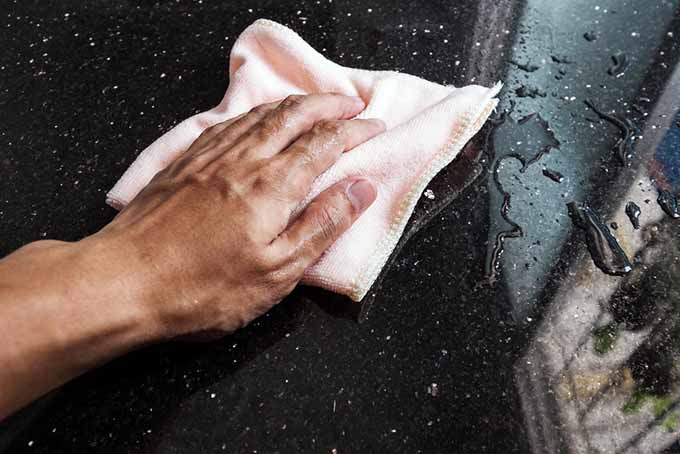
Rengör plattan regelbundet med flytande eller vattenlös ZHHIMG-rengöring för ytor. Valet av rengöringslösningar är viktigt. Om ett flyktigt lösningsmedel används (aceton, lackförtunning, alkohol etc.) kommer avdunstningen att kyla ner ytan och deformera den. I detta fall är det nödvändigt att låta plattan normaliseras innan den används, annars kommer mätfel att uppstå.
Den tid som krävs för att plattan ska normaliseras varierar beroende på plattans storlek och hur mycket kylning den får ske. En timme bör räcka för mindre plattor. Två timmar kan behövas för större plattor. Om ett vattenbaserat rengöringsmedel används kommer det också att ske en viss avdunstningskylning.
Plattan kommer också att hålla kvar vattnet, vilket kan orsaka rost på metalldelar som kommer i kontakt med ytan. Vissa rengöringsmedel lämnar också en klibbig rest efter att de torkat, vilket lockar till sig luftburet damm och faktiskt ökar slitaget snarare än minskar det.
Detta beror på plattans användning och miljö. Vi rekommenderar att en ny platta eller ett precisionsgranittillbehör genomgår en fullständig omkalibrering inom ett år efter inköp. Om granitytplattan kommer att användas flitigt kan det vara lämpligt att förkorta detta intervall till sex månader. Månatlig inspektion för upprepade mätfel med hjälp av ett elektroniskt vattenpass eller liknande apparat visar eventuella slitagepunkter och tar bara några minuter att utföra. Efter att resultaten av den första omkalibreringen har fastställts kan kalibreringsintervallet förlängas eller förkortas enligt vad som tillåts eller krävs av ert interna kvalitetssystem.
Vi kan erbjuda tjänster för att hjälpa dig inspektera och kalibrera din granitytplatta.

Det finns flera möjliga orsaker till variationer mellan kalibreringar:
- Ytan tvättades med en varm eller kall lösning före kalibrering och fick inte tillräckligt med tid att normaliseras
- Plattan är felaktigt stödd
- Temperaturförändring
- Utkast
- Direkt solljus eller annan strålningsvärme på plattans yta. Se till att takbelysning inte värmer upp ytan.
- Variationer i den vertikala temperaturgradienten mellan vinter och sommar (Om möjligt, känn till den vertikala gradienttemperaturen vid tidpunkten då kalibreringen utförs.)
- Plattan fick inte tillräckligt med tid att normaliseras efter leverans
- Felaktig användning av inspektionsutrustning eller användning av icke-kalibrerad utrustning
- Ytförändring till följd av slitage
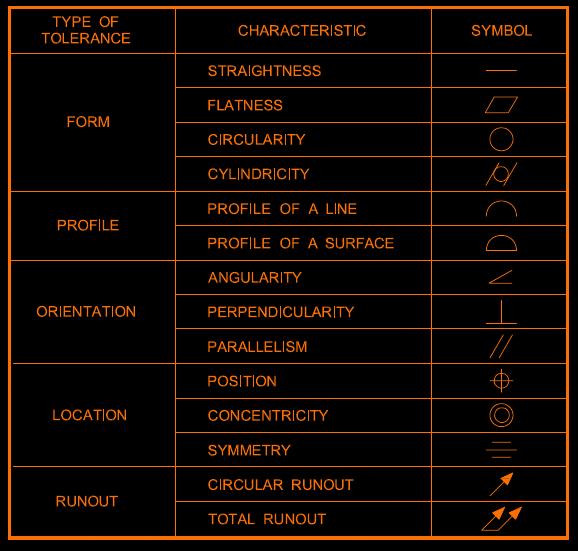
Hur många typer av hål finns det på precisionsgranit?
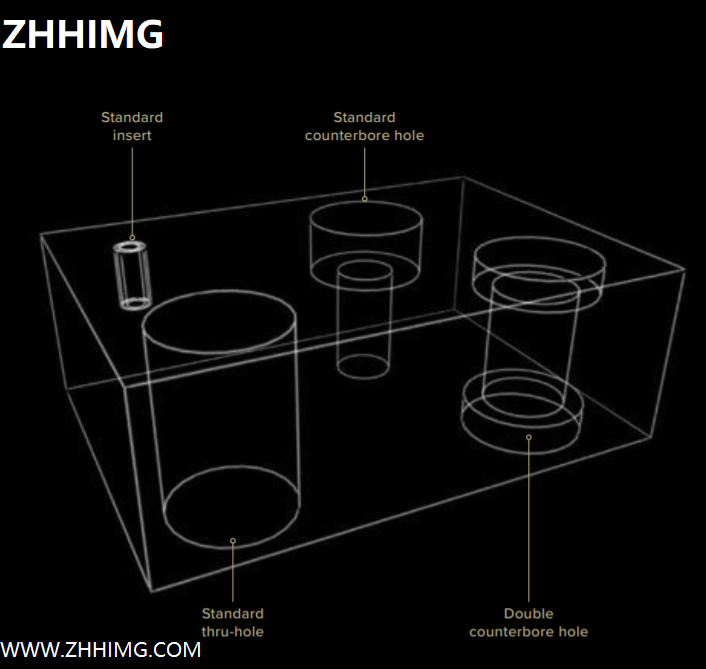
Spår på precisionskomponenter i granit
För många fabriker, inspektionsrum och laboratorier används precisionsplattor i granit som grund för noggrann mätning. Eftersom varje linjär mätning är beroende av en noggrann referensyta från vilken de slutliga måtten tas, ger plattorna det bästa referensplanet för arbetsinspektion och layout före bearbetning. De är också idealiska baser för att göra höjdmätningar och mäta ytor. Dessutom gör en hög grad av planhet, stabilitet, övergripande kvalitet och utförande dem till ett bra val för montering av sofistikerade mekaniska, elektroniska och optiska mätsystem. För alla dessa mätprocesser är det absolut nödvändigt att hålla plattorna kalibrerade.
Upprepa mätningar och planhet
Både planhet och upprepade mätningar är avgörande för att säkerställa en precisionsyta. Planhet kan betraktas som att alla punkter på ytan är inneslutna inom två parallella plan, basplanet och takplanet. Måttet på avståndet mellan planen är ytans totala planhet. Denna planhetsmätning har vanligtvis en tolerans och kan inkludera en sortbeteckning.
Planhetstoleranserna för tre standardkvaliteter definieras i den federala specifikationen enligt följande formel:
DIN-standard, GB-standard, ASME-standard, JJS-standard ... olika länder med olika standar ...
Mer information om standarden.
Förutom planhet måste repeterbarhet säkerställas. En upprepad mätning är en mätning av lokala planhetsområden. Det är en mätning som görs var som helst på ytan av en platta och som kommer att upprepas inom den angivna toleransen. Att kontrollera den lokala planheten till en snävare tolerans än den totala planheten garanterar en gradvis förändring av ytans planhetsprofil, vilket minimerar lokala fel.
För att säkerställa att en ytplatta uppfyller både specifikationerna för planhet och upprepade mätningar bör tillverkare av granitplattor använda den federala specifikationen GGG-P-463c som grund för sina specifikationer. Denna standard behandlar noggrannhet i upprepade mätningar, materialegenskaper hos granitplattor, ytfinish, placering av stödpunkter, styvhet, acceptabla inspektionsmetoder och installation av gängade insatser.
Kontroll av plattans noggrannhet
Genom att följa några enkla riktlinjer bör en investering i en granitplatta hålla i många år. Beroende på plattans användning, verkstadsmiljö och erforderlig noggrannhet varierar frekvensen för att kontrollera ytplattans noggrannhet. En allmän tumregel är att en ny platta ska genomgå en fullständig omkalibrering inom ett år efter inköpet. Om plattan används ofta är det lämpligt att förkorta detta intervall till sex månader.
Innan en ytplatta har slitits utöver specifikationen för total planhet kommer den att visa slitna eller vågiga stift. Månatlig inspektion för upprepade mätfel med hjälp av en upprepad avläsningsmätare kommer att identifiera slitagepunkter. En upprepad avläsningsmätare är ett högprecisionsinstrument som detekterar lokala fel och kan visas på en elektronisk förstärkare med hög förstoring.
Ett effektivt inspektionsprogram bör inkludera regelbundna kontroller med en autokollimator, vilket ger faktisk kalibrering av den totala planheten spårbar till National Institute of Standards and Technology (NIST). Omfattande kalibrering av tillverkaren eller ett oberoende företag är nödvändig då och då.
Variationer mellan kalibreringar
I vissa fall finns det variationer mellan kalibreringar av ytplattor. Ibland kan faktorer som ytförändringar till följd av slitage, felaktig användning av inspektionsutrustning eller användning av okalibrerad utrustning förklara dessa variationer. De två vanligaste faktorerna är dock temperatur och stöd.
En av de viktigaste variablerna är temperaturen. Ytan kan till exempel ha tvättats med en varm eller kall lösning före kalibreringen och inte fått tillräckligt med tid att normaliseras. Andra orsaker till temperaturförändringar inkluderar drag av kall eller varm luft, direkt solljus, takbelysning eller andra värmekällor på plattans yta.
Det kan också finnas variationer i den vertikala temperaturgradienten mellan vinter och sommar. I vissa fall får plattan inte tillräckligt med tid att normaliseras efter leverans. Det är en bra idé att registrera den vertikala gradienttemperaturen när kalibreringen utförs.
En annan vanlig orsak till kalibreringsvariationer är en platta som är felaktigt stödd. En ytplatta bör stödjas på tre punkter, helst placerade 20 % av längden in från plattans ändar. Två stöd bör placeras 20 % av bredden in från långsidorna, och det återstående stödet bör vara centrerat.
Endast tre punkter kan vila stadigt på något annat än en precisionsyta. Om man försöker stödja plattan på fler än tre punkter kommer plattan att få sitt stöd från olika kombinationer av tre punkter, vilka inte kommer att vara samma tre punkter som den stöddes på under produktionen. Detta kommer att orsaka fel eftersom plattan böjs för att anpassa sig till det nya stödarrangemanget. Överväg att använda stålstativ med stödbalkar utformade för att passa in i rätt stödpunkter. Stativ för detta ändamål finns vanligtvis tillgängliga från tillverkaren av ytplattan.
Om plattan är korrekt stödd är exakt nivellering endast nödvändig om en applikation anger det. Nivellering är inte nödvändig för att bibehålla noggrannheten hos en korrekt stödd platta.
Förläng plattans livslängd
Att följa några riktlinjer minskar slitaget på en granitplatta och förlänger i slutändan dess livslängd.
Först är det viktigt att hålla plattan ren. Luftburet slipmedel är oftast den största källan till slitage på en platta, eftersom det tenderar att fastna i arbetsstycken och kontaktytor på mätare.
Det är också viktigt att täcka plattorna för att skydda dem från damm och skador. Hållbarheten kan förlängas genom att täcka plattan när den inte används.
Rotera plattan regelbundet så att ett enskilt område inte utsätts för överdriven användning. Det rekommenderas också att byta ut kontaktplattorna i stål på mätinstrument mot kontaktplattor i hårdmetall.
Undvik att ställa mat eller läsk på tallriken. Många läskedrycker innehåller antingen kolsyra eller fosforsyra, vilket kan lösa upp de mjukare mineralerna och lämna små gropar i ytan.
Var man ska återfalla
När en granitplatta behöver slipas om, överväg om du vill utföra denna tjänst på plats eller på kalibreringsanläggningen. Det är alltid att föredra att plattan slipas om på fabriken eller en dedikerad anläggning. Om plattan däremot inte är alltför sliten, vanligtvis inom 0,001 tum från den erforderliga toleransen, kan den slipas om på plats. Om en platta är sliten så pass mycket att den är mer än 0,001 tum utanför toleransen, eller om den är kraftigt gropig eller hackig, bör den skickas till fabriken för slipning innan den slipas om.
En kalibreringsanläggning har utrustning och fabriksinställningar som ger optimala förutsättningar för korrekt plattkalibrering och omarbetning vid behov.
Stor noggrannhet bör iakttas vid val av en tekniker för kalibrering och ytbehandling på plats. Be om ackreditering och verifiera att den utrustning som teknikern kommer att använda har en spårbar kalibrering. Erfarenhet är också en viktig faktor, eftersom det tar många år att lära sig hur man korrekt slipar precisionsgranit.
Kritiska mätningar börjar med en precisionsgranitplatta som baslinje. Genom att säkerställa en tillförlitlig referens med hjälp av en korrekt kalibrerad ytplatta har tillverkare ett av de viktigaste verktygen för tillförlitliga mätningar och delar av bättre kvalitet.Q
Checklista för kalibreringsvariationer
1. Ytan tvättades med en varm eller kall lösning före kalibrering och fick inte tillräckligt med tid att normaliseras.
2. Plattan är felaktigt stödd.
3. Temperaturförändring.
4. Utkast.
5. Direkt solljus eller annan strålningsvärme på plattans yta. Se till att takbelysning inte värmer upp ytan.
6. Variationer i den vertikala temperaturgradienten mellan vinter och sommar. Om möjligt, känn till den vertikala gradienttemperaturen vid tidpunkten för kalibreringen.
7. Plattan fick inte tillräckligt med tid att normaliseras efter leverans.
8. Felaktig användning av inspektionsutrustning eller användning av okalibrerad utrustning.
9. Ytförändring till följd av slitage.
Tekniska tips
- Eftersom varje linjär mätning är beroende av en noggrann referensyta från vilken de slutliga måtten tas, ger ytplattor det bästa referensplanet för arbetsinspektion och layout före bearbetning.
- Att kontrollera den lokala planheten till en snävare tolerans än den totala planheten garanterar en gradvis förändring av ytans planhetsprofil, vilket minimerar lokala fel.
- Ett effektivt inspektionsprogram bör inkludera regelbundna kontroller med en autokollimator, vilket ger faktisk kalibrering av den övergripande planheten som kan spåras till den nationella inspektionsmyndigheten.
Bland mineralpartiklarna som granit består av är mer än 90 % fältspat och kvarts, varav fältspat är den största förekomsten. Fältspat är ofta vit, grå och rödaktig, och kvarts är mestadels färglös eller gråvit, vilket utgör granitens grundfärg. Fältspat och kvarts är hårda mineraler och är svåra att röra vid med en stålkniv. När det gäller de mörka fläckarna i graniten, främst svart glimmer, finns det även några andra mineraler. Även om biotit är relativt mjuk är dess förmåga att motstå stress inte svag, och samtidigt finns det en liten mängd av dem i graniten, ofta mindre än 10 %. Det är i detta materialtillstånd som graniten är särskilt stark.
En annan anledning till att granit är stark är att dess mineralpartiklar är tätt bundna till varandra och inbäddade i varandra. Porerna utgör ofta mindre än 1 % av bergets totala volym. Detta ger graniten förmågan att motstå starka tryck och fukt penetrerar den inte lätt.
Granitkomponenter är tillverkade av sten utan rost, syra och alkalibeständighet, god slitstyrka och lång livslängd, inget särskilt underhåll. Granitprecisionskomponenter används mestadels inom verktygstillverkning inom maskinindustrin. Därför kallas de granitprecisionskomponenter eller granitkomponenter. Egenskaperna hos granitprecisionskomponenter är i princip desamma som hos granitplattformar. Introduktion till verktygstillverkning och mätning av granitprecisionskomponenter: Precisionsbearbetning och mikrobearbetningsteknik är viktiga utvecklingsriktningar inom maskintillverkningsindustrin och de har blivit en viktig indikator för att mäta högteknologisk nivå. Utvecklingen av spetsteknik och försvarsindustrin är oskiljaktig från precisionsbearbetning och mikrobearbetningsteknik. Granitkomponenter kan skjutas smidigt i mätningen utan att stagnera. Allmänna repor vid mätning av arbetsytan påverkar inte mätnoggrannheten. Granitkomponenter måste designas och produceras enligt efterfrågesidans krav.
Användningsområde:
Som vi alla vet väljer fler och fler maskiner och utrustningar precisionskomponenter i granit.
Granitkomponenter används för dynamisk rörelse, linjärmotorer, CMM, CNC, lasermaskiner...
välkommen att kontakta oss för mer information.
Granitmätinstrument och mekaniska komponenter i granit är tillverkade av högkvalitativ Jinan Black-granit. Tack vare deras höga precision, långa livslängd, goda stabilitet och korrosionsbeständighet har de använts alltmer inom produktinspektion inom modern industri och inom vetenskapliga områden som mekanik, flyg- och rymdteknik och vetenskaplig forskning.
Fördelar
----Dubbelt så hårt som gjutjärn;
----Minimala dimensionsförändringar beror på temperaturförändringar;
----Fri från vridning, så det finns inget avbrott i arbetet;
----Fri från grader eller utskjutande delar på grund av den fina kornstrukturen och obetydliga klibbigheten, vilket säkerställer en hög grad av planhet under en lång livslängd och orsakar ingen skada på andra delar eller instrument;
----Problemfri drift för användning med magnetiska material;
----Lång livslängd och rostfri, vilket resulterar i låga underhållskostnader.
Precisionsgranitytplattorna är precisionsöverlappade till hög planhet för att uppnå noggrannhet och används som bas för montering av sofistikerade mekaniska, elektroniska och optiska mätsystem.
Några av de unika egenskaperna hos granitytplattan:
Likformighet i hårdhet;
Noggranna förhållanden under belastning;
Vibrationsabsorberande;
Lätt att rengöra;
Omslagsbeständig;
Låg porositet;
Icke-slipande;
Omagnetisk
Fördelar med granit ytplatta
För det första, efter en lång period av naturligt åldrande, har berget en enhetlig struktur, en minimal koefficient och den inre spänningen försvunnit helt, utan att deformeras, vilket ger hög precision.
För det andra kommer det inte att finnas några repor, inte under konstanta temperaturförhållanden, vid rumstemperatur kan också bibehålla noggrannheten i temperaturmätningen.
För det tredje, inte magnetisering, mätningen kan vara smidig rörelse, ingen knarrande känsla, inte påverkad av fukt, planet är fixerat.
För det fjärde är styvheten god, hårdheten hög och nötningsbeständigheten stark.
Fem, inte rädd för syra, alkalisk vätskeerosion, rostar inte, behöver inte måla med olja, inte lätt att klistra mikrodamm, underhåll, lätt att underhålla, lång livslängd.
Varför välja granitbas istället för maskinbädd i gjutjärn?
1. Granitmaskinbas kan hålla högre precision än gjutjärnsmaskinbas. Gjutjärnsmaskinbas påverkas lätt av temperatur och fuktighet, men det gör inte granitmaskinbasen;
2. Med samma storlek på granitmaskinbasen och gjutjärnsbasen är granitmaskinbasen mer kostnadseffektiv än gjutjärn;
3. En speciell maskinbas av granit är lättare att ytbehandla än en maskinbas av gjutjärn.
Granitytplattor är viktiga instrument i inspektionslaboratorier över hela landet. Den kalibrerade, extremt plana ytan på en ytplatta gör det möjligt för inspektörer att använda den som baslinje för delinspektioner och instrumentkalibrering. Utan den stabilitet som ytplattor ger skulle många av de snävt tolererade delarna inom olika tekniska och medicinska områden vara mycket svårare, om inte omöjliga, att tillverka korrekt. För att använda ett granitytblock för att kalibrera och inspektera andra material och verktyg måste naturligtvis granitens noggrannhet bedömas. Användare kan kalibrera en granitytplatta för att säkerställa dess noggrannhet.
Rengör granitens ytplatta före kalibrering. Häll en liten mängd rengöringsmedel för ytplattan på en ren, mjuk trasa och torka av granitens yta. Torka omedelbart bort rengöringsmedlet från ytplattan med en torr trasa. Låt inte rengöringsvätskan lufttorka.
Placera en upprepad mätmätare i mitten av granitytplattan.
Nollställ mätinstrumentet för upprepad mätning mot granitplattans yta.
Flytta mätaren långsamt över granitens yta. Titta på mätarens indikator och registrera topparna för eventuella höjdvariationer när du flyttar instrumentet över plattan.
Jämför planhetsvariationen över plattans yta med toleranserna för din ytplatta, vilka varierar beroende på plattans storlek och granitens planhetsgrad. Se den federala specifikationen GGG-P-463c (se Resurser) för att avgöra om din platta uppfyller planhetskraven för sin storlek och kvalitet. Variationen mellan den högsta punkten på plattan och den lägsta punkten på plattan är dess planhetsmått.
Kontrollera att de största djupvariationerna på plattans yta faller inom repeterbarhetsspecifikationerna för en platta av den storleken och kvaliteten. Se den federala specifikationen GGG-P-463c (se Resurser) för att avgöra om din platta uppfyller repeterbarhetskraven för sin storlek. Kassera ytplattan om även en enda punkt inte uppfyller repeterbarhetskraven.
Sluta använda en granitplatta som inte uppfyller federala krav. Returnera plattan till tillverkaren eller till ett granitbeläggningsföretag för att få blocket polerat om för att uppfylla specifikationerna.
Dricks
Utför formella kalibreringar minst en gång per år, även om granitytplattor som används flitigt bör kalibreras oftare.
Formell, registrerbar kalibrering i tillverknings- eller inspektionsmiljöer utförs ofta av kvalitetssäkring eller en extern leverantör av kalibreringstjänster, även om vem som helst kan använda en upprepad mätare för att informellt kontrollera en ytplatta före användning.
Den tidiga historien om granitplattor
Före andra världskriget använde tillverkare stålplåtar för dimensionskontroll av delar. Under andra världskriget ökade behovet av stål dramatiskt, och många stålplåtar smältes ner. En ersättning behövdes, och granit blev det material som valdes på grund av dess överlägsna metrologiska egenskaper.
Flera fördelar med granit jämfört med stål blev uppenbara. Granit är hårdare, men mer sprött och benägen att flisas. Man kan slipa granit till mycket större planhet och snabbare än stål. Granit har också den önskvärda egenskapen att ha lägre värmeutvidgning jämfört med stål. Dessutom, om en stålplåt behövde repareras, var den tvungen att skrapas för hand av hantverkare som också använde sina färdigheter i maskinrenovering.
Som en sidoanteckning används vissa stålplattor fortfarande idag.
Metrologiska egenskaper hos granitplattor
Granit är en magmatisk bergart som bildas av vulkanutbrott. Som jämförelse är marmor omvandlad kalksten. För metrologisk användning bör den valda graniten uppfylla specifika krav som anges i Federal Specification GGG-P-463c, hädanefter kallad Fed Specs, och specifikt del 3.1 3.1 Bland Fed Specs bör granit ha en fin till medelkornig textur.
Granit är ett hårt material, men dess hårdhet varierar av flera anledningar. En erfaren granittekniker kan uppskatta hårdheten utifrån dess färg, vilket är en indikation på dess kvartsinnehåll. Granits hårdhet är en egenskap som delvis definieras av mängden kvartsinnehåll och avsaknaden av glimmer. De röda och rosa graniterna tenderar att vara hårdast, de grå är medelhårda och de svarta är de mjukaste.
Youngs elasticitetsmodul används för att uttrycka stenens flexibilitet eller hårdhet. Rosa granit har i genomsnitt 3–5 poäng på skalan, grå 5–7 poäng och svart 7–10 poäng. Ju mindre siffra, desto hårdare tenderar graniten att vara. Ju större siffra, desto mjukare och mer flexibel är graniten. Det är viktigt att känna till granitens hårdhet när man väljer en tjocklek som krävs för toleransgrader och vikten på delar och mått som placeras på den.
Förr i tiden, när det fanns riktiga maskinister, kända på sina trigonometriska häften i skjortfickorna, ansågs svart granit vara "den bästa". Den bästa definierades som den typ som gav mest slitstyrka eller var hårdare. En nackdel är att de hårdare graniterna tenderar att flisas eller sticka lättare. Maskinister var så övertygade om att svart granit var bäst att vissa tillverkare av rosa granit färgade den svart.
Jag har personligen bevittnat en platta som tappas av en gaffeltruck när den flyttas från förrådet. Plattan träffade golvet och delades itu, vilket avslöjade den verkliga rosa färgen. Var försiktig om du planerar att köpa svart granit från Kina. Vi rekommenderar att du slösar dina pengar på något annat sätt. En granitplatta kan variera i hårdhet inom sig. En strimma av kvarts kan vara mycket hårdare än resten av ytplattan. Ett lager av svart gabbro kan göra ett område mycket mjukare. En välutbildad och erfaren reparationstekniker för ytplattor vet hur man hanterar dessa mjuka områden.
Ytplåtkvaliteter
Det finns fyra grader av ytplåtar. Laboratoriekvalitet AA och A, rumsinspektionskvalitet B, och den fjärde är verkstadskvalitet. Kvaliteterna AA och A är de planaste med planhetstoleranser bättre än 0,00001 tum för en AA-plåt. Verkstadskvaliteterna är de minst plana och, som namnet antyder, är de avsedda för användning i verktygsrum. Medan kvalitet AA, kvalitet A och kvalitet B är avsedda för användning i inspektions- eller kvalitetskontrolllabb.
PRoper-testning för ytplattkalibrering
Jag har alltid sagt till mina kunder att jag kan ta ut vilken 10-åring som helst från min kyrka och lära dem på bara några dagar hur man testar en tallrik. Det är inte svårt. Det kräver viss teknik för att utföra uppgiften snabbt, tekniker som man lär sig med tiden och mycket repetition. Jag borde informera er, och jag kan inte nog betona, att Fed Spec GGG-P-463c INTE ÄR en kalibreringsprocedur! Mer om det senare.
Kalibrering av total planhet (medelruta) och repeterbarhetskontroller (lokal slitage) är ett måste enligt Fed-specifikationerna. Det enda undantaget från detta är med små plattor där repeterbarhet endast krävs.
Lika viktigt som de andra testerna är även testet för termiska gradienter. (Se Delta T nedan)
Figur 1
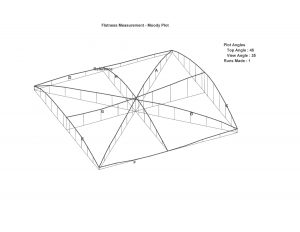
Planhetstestning har fyra godkända metoder. Elektroniska vattenpass, autokollimering, laser och en anordning som kallas planlokalisering. Vi använder endast elektroniska vattenpass eftersom de är den mest exakta och snabbaste metoden av flera anledningar.
Lasrar och autokollimatorer använder en mycket rak ljusstråle som referens. Man gör en rakhetsmätning av en granitplatta genom att jämföra variationen i avstånd mellan ytplattan och ljusstrålen. Genom att ta en rak ljusstråle och träffa den på ett reflektormål medan reflektormålet flyttas ner längs ytplattan, är avståndet mellan den utsända strålen och returstrålen en rakhetsmätning.
Här är problemet med den här metoden. Målet och källan påverkas av vibrationer, omgivningstemperatur, ett mål som inte är plant eller repat, kontaminering i luften och luftrörelser (strömmar). Alla dessa bidrar till ytterligare felfaktorer. Dessutom är bidraget från operatörsfel från kontroller med en autokollimator större.
En erfaren autokollimatoranvändare kan göra mycket noggranna mätningar men har fortfarande problem med avläsningarnas konsistens, särskilt över längre avstånd, eftersom reflektionerna tenderar att vidgas eller bli något suddiga. Dessutom ger ett inte helt platt mål och en lång dags tittande genom linsen ytterligare fel.
En planlokaliseringsanordning är bara fånig. Denna anordning använder en någorlunda rak (jämfört med en extremt rak kollimerad ljusstråle eller laserstråle) som referens. Den mekaniska anordningen använder inte bara en indikator som normalt bara har en upplösning på 20 u-tum, utan stångens orakhet och olika material bidrar avsevärt till mätfel. Enligt vår mening, även om metoden är acceptabel, skulle inget kompetent laboratorium någonsin använda en planlokaliseringsanordning som ett slutinspektionsinstrument.
Elektroniska vattenpass använder gravitationen som referens. Differentiella elektroniska vattenpass påverkas inte av vibrationer. De har en upplösning så låg som 0,1 bågsekund och mätningarna är snabba, noggranna och det finns mycket lite bidrag från fel från en erfaren operatör. Varken plansökare eller autokollimatorer ger datorgenererade topografiska (Figur 1) eller isometriska diagram (Figur 2) av ytan.
Figur 2
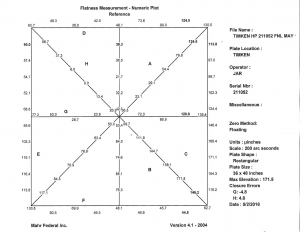
Ett korrekt test av ytans planhet
Ett korrekt test av ytans planhet är en så viktig del av detta dokument att jag borde ha placerat det i början. Som tidigare nämnts är Fed Spec. GGG-p-463c INTE en kalibreringsmetod. Den fungerar som en vägledning för många aspekter av granit av metrologisk kvalitet vars avsedda köpare är vilken federal myndighet som helst, och det inkluderar testmetoder och toleranser eller kvaliteter. Om en entreprenör hävdar att de följt Fed Specs, ska planhetsvärdet bestämmas med Moody-metoden.
Moody var en karl från 50-talet som utarbetade en matematisk metod för att bestämma den totala planheten och ta hänsyn till orienteringen av de testade linjerna, om de låg tillräckligt nära varandra i samma plan. Ingenting har förändrats. Allied Signal försökte förbättra den matematiska metoden men drog slutsatsen att skillnaderna var så små att det inte var värt ansträngningen.
Om en entreprenör för ytplåtsarbete använder elektroniska vattenpass eller laser, använder hen en dator som hjälp med beräkningarna. Utan datorhjälp måste teknikern, som använder autokollimering, beräkna avläsningarna för hand. I verkligheten gör de det inte. Det tar för lång tid och kan ärligt talat vara för utmanande. I ett planhetstest med Moody-metoden testar teknikern åtta linjer i en Union Jack-konfiguration för att kontrollera rakheten.
Den humöriga metoden
Moody-metoden är ett matematiskt sätt att avgöra om de åtta linjerna är på samma plan. Annars har du bara åtta raka linjer som kanske inte är på eller nära samma plan. Vidare, en entreprenör som påstår sig följa Fed Spec och använder autokollimering, hanmåstegenerera åtta sidor med data. En sida för varje linje som kontrolleras för att bevisa hans testning, reparation eller båda. Annars har entreprenören ingen aning om vad det verkliga planhetsvärdet är.
Jag är säker på att om du är en av dem som får dina plattor kalibrerade av en entreprenör med hjälp av autokollimering, så har du aldrig sett de sidorna! Figur 3 är ett exempel påbara enÅtta sidor är nödvändiga för att beräkna den totala planheten. En indikation på sådan okunskap och illvilja är om din rapport har fint avrundade siffror. Till exempel 200, 400, 650, etc. Ett korrekt beräknat värde är ett reellt tal. Till exempel 325,4 u In. När entreprenören använder Moody-metoden för beräkningar, och teknikern beräknar värdena manuellt, bör du få åtta sidor med beräkningar och ett isometriskt diagram. Det isometriska diagrammet visar de varierande höjderna längs de olika linjerna och hur mycket avstånd som skiljer de valda skärningspunkterna åt.
Figur 3(Det tar åtta sidor som denna att beräkna planhet manuellt. Se till att fråga varför du inte får detta om din entreprenör använder autokollimering!)
Figur 4
Dimensionella mättekniker använder differentialnivåer (Figur 4) som föredragna apparater för att mäta små förändringar i vinkel från mätstation till station. Nivåerna har en upplösning ner till 0,1 bågsekunder (5 u-tum med 4-tums släde), är extremt stabila, påverkas inte av vibrationer, uppmätta avstånd, luftströmmar, operatörströtthet, luftföroreningar eller några av de problem som finns med andra apparater. Lägg till datorhjälp, och uppgiften blir relativt snabb, och genererar topografiska och isometriska diagram som bevisar verifieringen och, viktigast av allt, reparationen.
Ett korrekt repeterbarhetstest
Upprepad avläsning eller repeterbarhet är det viktigaste testet. Utrustningen vi använder för att utföra repeterbarhetstestet är en fixtur för upprepad avläsning, en LVDT och en förstärkare som är nödvändig för högupplösta avläsningar. Vi ställer in LVDT-förstärkaren på en minsta upplösning på 10 u-tum eller 5 u-tum för plattor med hög noggrannhet.
Att använda en mekanisk indikator med en upplösning på endast 20 u-tum är värdelöst om du försöker testa ett repeterbarhetskrav på 35 u-tum. Indikatorer har en osäkerhet på 40 u-tum! Upprepad avläsning imiterar en höjdmätare/delkonfiguration.
Repeterbarhet ÄR INTE detsamma som total planhet (medelplan). Jag föredrar att tänka på repeterbarhet i granit som en konsekvent radiemätning.
Figur 5
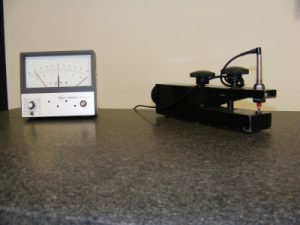
Om du testar repeterbarheten hos en rund kula har du visat att kulans radie inte har förändrats. (Den ideala profilen för en korrekt reparerad platta har en konvex krönt form.) Det är dock uppenbart att kulan inte är platt. Tja, på sätt och vis. På ett extremt kort avstånd är den platt. Eftersom majoriteten av inspektionsarbetet involverar en höjdmätare mycket nära detaljen blir repeterbarhet den mest kritiska egenskapen hos en granitplatta. Det är viktigare än den övergripande planheten om inte en användare kontrollerar rakheten hos en lång detalj.
Se till att din entreprenör utför ett upprepat avläsningstest. En platta kan ha ett upprepat avläsningstest som avsevärt överstiger toleransgränserna men ändå klara ett planhetstest! Otroligt nog kan ett laboratorium få ackreditering i tester som inte inkluderar ett upprepat avläsningstest. Ett laboratorium som inte kan reparera eller inte är särskilt bra på att reparera föredrar att endast utföra planhetstestning. Planheten förändras sällan om du inte flyttar plattan.
Upprepad avläsning är det enklaste att testa men det svåraste att uppnå vid läppning. Se till att din entreprenör kan återställa repeterbarheten utan att "skava" ytan eller lämna vågor i ytan.
Delta T-test
Detta test innebär att man mäter stenens FAKTISKA temperatur vid dess övre och undre yta och beräknar skillnaden, Delta T, för rapportering på certifikatet.
Det är viktigt att veta att den genomsnittliga värmeutvidgningskoefficienten i granit är 3,5 uIn/tum/grad. Omgivningstemperaturer och luftfuktighets effekt på en granitplatta är försumbar. En ytplatta kan dock gå utanför toleransen eller ibland förbättras även vid ett Delta T på 0,3–0,5 grader Fahrenheit. Det är nödvändigt att veta om Delta T ligger inom 0,12 grader Fahrenheit från skillnaden från den senaste kalibreringen.
Det är också viktigt att veta att en platta sin arbetsyta migrerar mot värme. Om den övre temperaturen är varmare än den nedre, stiger den övre ytan. Om botten är varmare, vilket är sällsynt, sjunker den övre ytan. Det räcker inte för en kvalitetschef eller tekniker att veta att plattan är plan och repeterbar vid tidpunkten för kalibrering eller reparation, utan att veta vad dess Delta T-värde var vid tidpunkten för den slutliga kalibreringstestningen. I kritiska situationer kan en användare, genom att själv mäta Delta T-värdet, avgöra om en platta har hamnat utanför toleransgränsen enbart på grund av Delta T-variationer. Lyckligtvis tar det många timmar eller till och med dagar för granit att acklimatisera sig till en miljö. Mindre fluktuationer i omgivningstemperaturen under dagen påverkar inte detta. Av dessa skäl rapporterar vi inte omgivningskalibreringstemperatur eller luftfuktighet eftersom effekterna är försumbara.
Granitplåtslitage
Även om granit är hårdare än stålplåtar, utvecklar granit fortfarande låga fläckar på ytan. Upprepad rörelse av delar och mätare på ytan av plattan är den största källan till slitage, särskilt om samma område används ständigt. Smuts och slipdamm som finns kvar på en plattas yta påskyndar slitageprocessen när det kommer mellan delar eller mätare och granytan. När delar och mätare flyttas över ytan är slipdamm vanligtvis orsaken till ytterligare slitage. Jag rekommenderar starkt konstant rengöring för att minska slitaget. Vi har sett slitage på plattor orsakat av dagliga UPS-paketleveranser placerade ovanpå plattorna! Dessa lokaliserade slitageområden påverkar kalibreringens repeterbarhetstestavläsningar. Undvik slitage genom att rengöra regelbundet.
Rengöring av granitplåt
För att hålla plattan ren, använd en tygduk för att ta bort grus. Tryck bara mycket lätt så att du inte lämnar limrester. En väl använd tygduk gör ett utmärkt jobb med att samla upp slipdamm mellan rengöringarna. Arbeta inte på samma ställe. Flytta runt din installation på plattan och fördela slitaget. Det är okej att använda alkohol för att rengöra en tallrik, men var medveten om att det tillfälligt kommer att superkyla ytan. Vatten med en liten mängd tvål är utmärkt. Kommersiellt tillgängliga rengöringsmedel som Starretts rengöringsmedel är också utmärkta att använda, men se till att du får bort alla tvålrester från ytan.
Reparation av granitplåt
Det borde nu vara uppenbart vikten av att se till att din ytplåtsleverantör utför en kompetent kalibrering. De laboratorier som avser "Clearing House" och erbjuder program där man kan göra allt med ett samtal har sällan en tekniker som kan utföra reparationer. Även om de erbjuder reparationer har de inte alltid en tekniker som har den erfarenhet som behövs när ytplåten är betydligt utanför toleransen.
Om du får veta att en platta inte kan repareras på grund av extremt slitage, ring oss. Vi kan troligtvis reparera den.
Våra tekniker arbetar under en ett till ett och ett halvt års lärlingsutbildning under ledning av en Master Surface Plate-tekniker. Vi definierar en Master Surface Plate-tekniker som någon som har avslutat sin lärlingsutbildning och har ytterligare över tio års erfarenhet av kalibrering och reparation av ytplåt. Vi på Dimensional Gauge har tre Master-tekniker i personalen med sammanlagt över 60 års erfarenhet. En av våra Master-tekniker finns tillgänglig hela tiden för stöd och vägledning när svåra situationer uppstår. Alla våra tekniker har erfarenhet av kalibrering av ytplåtar i alla storlekar, från små till mycket stora, varierande miljöförhållanden, olika branscher och större slitageproblem.
Fed-specifikationer har ett specifikt ytbehandlingskrav på 16 till 64 genomsnittlig aritmetisk ytjämnhet (AA). Vi föredrar en ytbehandling i intervallet 30-35 AA. Det är precis tillräckligt med ytjämnhet för att säkerställa att delar och mätdon rör sig smidigt och inte fastnar eller vrids fast på ytplattan.
När vi reparerar inspekterar vi plattan för korrekt montering och jämnhet. Vi använder en torrlappningsmetod, men vid extremt slitage som kräver omfattande granitborttagning våtlappar vi. Våra tekniker städar upp efter sig, de är noggranna, snabba och exakta. Det är viktigt eftersom kostnaden för granitplåtservice inkluderar din driftstopp och förlorad produktion. En kompetent reparation är av största vikt, och du bör aldrig välja en entreprenör utifrån pris eller bekvämlighet. Vissa kalibreringsarbeten kräver välutbildade personer. Det har vi.
Slutliga kalibreringsrapporter
För varje reparation och kalibrering av ytplatta tillhandahåller vi detaljerade professionella rapporter. Våra rapporter innehåller en betydande mängd både kritisk och relevant information. Fed Spec. kräver det mesta av den information vi tillhandahållit. Med undantag för de som finns i andra kvalitetsstandarder som ISO/IEC-17025, är de lägsta Fed Spec. för rapporter:
- Storlek i fot (X' x X')
- Färg
- Stil (Avser utan klämlister eller med två eller fyra lister)
- Uppskattad elasticitetsmodul
- Medelplanstolerans (bestäms av lutning/storlek)
- Tolerans vid upprepad avläsning (bestäms av diagonallängden i tum)
- Medelplan som hittat
- Medelplan som vänster
- Upprepa avläsningen som hittats
- Upprepa läsningen som till vänster
- Delta T (Temperaturskillnad mellan övre och nedre ytor)
Om teknikern behöver utföra läppning eller reparationsarbete på ytplattan, åtföljs kalibreringscertifikatet av ett topografisk eller isometriskt diagram för att bevisa en giltig reparation.
Några ord om ISO/IEC-17025-ackrediteringar och de laboratorier som har dem
Bara för att ett laboratorium är ackrediterat inom kalibrering av ytplattor betyder det inte nödvändigtvis att de vet vad de gör, än mindre att de gör det korrekt! Det betyder inte heller nödvändigtvis att laboratoriet kan reparera. Ackrediteringsorganen gör ingen skillnad mellan verifiering och kalibrering (reparation).Aoch jag känner till en, kanske2ackrediteringsorgan som kommer attLslipsAband runt min hund om jag bara betalade dem tillräckligt med pengar! Det är ett sorgligt faktum. Jag har sett laboratorier få ackreditering genom att bara utföra ett av de tre tester som krävs. Dessutom har jag sett laboratorier få ackreditering med orealistiska osäkerheter och bli ackrediterade utan några bevis eller demonstrationer för hur de beräknade värdena. Det är allt olyckligt.
Summering
Man kan inte underskatta precisionsgranitplattors roll. Den plana referens som granitplattorna utgör är grunden för alla andra mätningar.
Du kan använda de modernaste, mest exakta och mest mångsidiga mätinstrumenten. Det är dock svårt att fastställa exakta mätningar om referensytan inte är plan. En gång sa en potentiell kund till mig "det är bara sten!" Mitt svar var: "Okej, du har rätt, och du kan definitivt inte rättfärdiga att experter kommer in för att underhålla dina ytplattor."
Pris är aldrig en bra anledning att välja entreprenörer för ytbeläggning. Inköpare, revisorer och ett oroande antal kvalitetsingenjörer förstår inte alltid att omcertifiering av granitplattor inte är som att omcertifiera en mikrometer, skjutmått eller ett DMM.
Vissa instrument kräver expertis, inte ett lågt pris. Med det sagt är våra priser mycket rimliga. Särskilt för att vi ska känna oss trygga med att vi utför arbetet korrekt. Vi går långt utöver ISO-17025 och federala specifikationskrav i mervärde.
Ytplattor är grunden för många dimensionella mätningar, och det är nödvändigt att ta hand om din ytplatta på rätt sätt för att säkerställa mätnoggrannhet.
Granit är det mest populära materialet som används för ytplattor på grund av dess ideala fysiska egenskaper, såsom ythårdhet och låg känslighet för temperaturfluktuationer. Vid fortsatt användning kan dock ytplattor utsättas för slitage.
Planhet och repeterbarhet är båda kritiska aspekter för att avgöra om en platta ger en exakt yta för att erhålla noggranna mätningar. Toleranserna för båda aspekterna definieras enligt Federal Specification GGG-P-463C, DIN, GB, JJS... Planhet är mätningen av avståndet mellan den högsta punkten (takplanet) och den lägsta punkten (basplanet) på plattan. Repeterbarhet avgör om en mätning tagen från ett område kan upprepas över hela plattan inom den angivna toleransen. Detta säkerställer att det inte finns några toppar eller dalar i plattan. Om avläsningarna inte ligger inom angivna riktlinjer kan omyläggning krävas för att mätningarna ska återgå till specifikationen.
Rutinmässig kalibrering av ytplattor är nödvändig för att säkerställa planhet och repeterbarhet över tid. Precisionsmätningsgruppen på Cross är ISO 17025-ackrediterad för kalibrering av ytplattors planhet och repeterbarhet. Vi använder Mahr Surface Plate Certification System som innehåller:
- Humör- och profilanalys,
- Isometriska eller numeriska diagram,
- Genomsnitt för flera körningar, och
- Automatisk gradering enligt branschstandarder.
Mahrs datorstödda modell fastställer alla vinkel- eller linjära avvikelser från absolut nivå och är idealisk för mycket exakt profilering av ytplattor.
Intervallet mellan kalibreringarna varierar beroende på användningsfrekvens, miljöförhållandena där plattan är placerad och ditt företags specifika kvalitetskrav. Att underhålla din ytplatta korrekt kan möjliggöra längre intervall mellan varje kalibrering, hjälpa dig att undvika den extra kostnaden för omkalibrering och viktigast av allt säkerställer att de mätningar du får på plattan är så exakta som möjligt. Även om ytplattor verkar robusta är de precisionsinstrument och bör behandlas som sådana. Här är några saker att tänka på när det gäller skötsel av dina ytplattor:
- Håll tallriken ren och täck den om möjligt över när den inte används.
- Ingenting ska placeras på plattan annat än givare eller delar som ska mätas.
- Använd inte samma plats på tallriken varje gång.
- Om möjligt, rotera plattan regelbundet.
- Respektera belastningsgränsen för din tallrik
Precisionsgranitbas kan förbättra maskinverktygets prestanda
Kraven ökar ständigt inom maskinteknik i allmänhet och inom maskinkonstruktion i synnerhet. Att uppnå maximal precision och prestanda utan att öka kostnaderna är en ständig utmaning för att vara konkurrenskraftig. Maskinbädden är en avgörande faktor här. Därför förlitar sig fler och fler maskintillverkare på granit. På grund av dess fysikaliska parametrar erbjuder den tydliga fördelar som inte kan uppnås med stål eller polymerbetong.
Granit är en så kallad vulkanisk djupbergart och har en mycket tät och homogen struktur med extremt låg utvidgningskoefficient, låg värmeledningsförmåga och hög vibrationsdämpning.
Nedan kommer du att upptäcka varför den allmänna uppfattningen att granit i huvudsak endast är lämplig som maskinbas för avancerade koordinatmätmaskiner är sedan länge föråldrad och varför detta naturliga material som maskinbas är ett mycket fördelaktigt alternativ till stål eller gjutjärn även för högprecisionsmaskiner.
Vi kan tillverka granitkomponenter för dynamisk rörelse, granitkomponenter för linjärmotorer, granitkomponenter för ndt, granitkomponenter för röntgen, granitkomponenter för centrifugering, granitkomponenter för cnc, granitprecision för laser, granitkomponenter för flyg- och rymdteknik, granitkomponenter för precisionsbord...
Högt mervärde utan extra kostnader
Den ökande användningen av granit inom maskinteknik beror inte så mycket på den massiva ökningen av stålpriset. Snarare beror det på att det mervärde för verktygsmaskinen som uppnås med en maskinbädd av granit är möjligt till mycket liten eller ingen extra kostnad. Detta bevisas av kostnadsjämförelser mellan välkända verktygsmaskintillverkare i Tyskland och Europa.
Den avsevärda förbättringen av termodynamisk stabilitet, vibrationsdämpning och långsiktig precision som granit möjliggör kan inte uppnås med en bädd av gjutjärn eller stål, eller endast till en relativt hög kostnad. Till exempel kan termiska fel stå för upp till 75 % av en maskins totala fel, och kompensation försöks ofta med programvara – med måttlig framgång. På grund av sin låga värmeledningsförmåga är granit en bättre grund för långsiktig precision.
Med en tolerans på 1 μm uppfyller granit enkelt planhetskraven enligt DIN 876 för noggrannhetsgrad 00. Med ett värde på 6 på hårdhetsskalan 1 till 10 är den extremt hård, och med sin specifika vikt på 2,8 g/cm³ når den nästan upp till aluminiums värde. Detta resulterar också i ytterligare fördelar som högre matningshastigheter, högre axelaccelerationer och en förlängd livslängd för skärande verktygsmaskiner. Därmed flyttar övergången från en gjuten bädd till en granitmaskinbädd den aktuella verktygsmaskinen till high-end-klassen vad gäller precision och prestanda – utan extra kostnad.
Granits förbättrade ekologiska fotavtryck
Till skillnad från material som stål eller gjutjärn behöver natursten inte produceras med mycket energi och tillsatser. Endast relativt små mängder energi krävs för brytning och ytbehandling. Detta resulterar i ett överlägset ekologiskt fotavtryck, som även i slutet av en maskins livslängd överträffar stålets som material. Granitbädden kan vara basen för en ny maskin eller användas för helt andra ändamål, såsom strimling för vägbyggen.
Det råder inte heller någon brist på resurser för granit. Det är en djup bergart som bildats av magma i jordskorpan. Den har "mognat" under miljontals år och finns tillgänglig i mycket stora mängder som en naturresurs på nästan alla kontinenter, inklusive hela Europa.
Slutsats: De många påvisbara fördelarna med granit jämfört med stål eller gjutjärn motiverar den ökande viljan hos maskiningenjörer att använda detta naturmaterial som grund för högprecisions- och högpresterande verktygsmaskiner. Detaljerad information om granits egenskaper, vilka är fördelaktiga för verktygsmaskiner och maskinteknik, finns i denna ytterligare artikel.
En upprepad mätning är en mätning av lokala planhetsområden. Specifikationen för upprepade mätningar anger att en mätning som görs var som helst på ytan av en platta kommer att upprepas inom den angivna toleransen. Att kontrollera den lokala planheten närmare än den totala planheten garanterar en gradvis förändring av ytans planhetsprofil, vilket minimerar lokala fel.
De flesta tillverkare, inklusive importerade märken, följer den federala specifikationen för totala planhetstoleranser, men många förbiser upprepade mätningar. Många av de lågpris- eller budgetplattor som finns på marknaden idag garanterar inte upprepade mätningar. En tillverkare som inte garanterar upprepade mätningar producerar INTE plattor som uppfyller kraven i ASME B89.3.7-2013 eller Federal Specification GGG-P-463c, eller DIN 876, GB, JJS...
Båda är avgörande för att säkerställa en precisionsyta för noggranna mätningar. Planhetsspecifikationen ensam är inte tillräcklig för att garantera mätnoggrannhet. Ta som exempel en 36 X 48 inspektionsklass A-ytplatta, som ENDAST uppfyller planhetsspecifikationen på 0,000300". Om den kontrollerade delen överbryggar flera toppar och mätaren som används befinner sig på en låg punkt, kan mätfelet vara hela toleransen i ett område, 0,00300". Det kan faktiskt vara mycket högre om mätaren vilar på sluttningen av en sluttning.
Fel på 0,000600"–0,000800" är möjliga, beroende på lutningens svårighetsgrad och armlängden på den mätare som används. Om denna platta hade en specifikation för upprepad mätning på 0,000050"FIR skulle mätfelet vara mindre än 0,000050" oavsett var mätningen görs på plattan. Ett annat problem, som vanligtvis uppstår när en outbildad tekniker försöker ytbelägga en platta på plats, är användningen av enbart upprepade mätningar för att certifiera en platta.
Instrumenten som används för att verifiera repeterbarhet är INTE utformade för att kontrollera den totala planheten. När de är inställda på noll på en perfekt böjd yta kommer de att fortsätta att visa noll, oavsett om ytan är perfekt plan, perfekt konkav eller konvex 1/2"! De verifierar helt enkelt ytans enhetlighet, inte planheten. Endast en platta som uppfyller både planhetsspecifikationen OCH specifikationen för upprepad mätning uppfyller verkligen kraven i ASME B89.3.7-2013 eller Federal Specification GGG-P-463c.
Ask us about or flatness specification and repeat measurement promise by calling +86 19969991659 or emailing INFO@ZHHIMG.COM
Ja, men de kan bara garanteras för en specifik vertikal temperaturgradient. Effekterna av termisk expansion på plattan kan lätt orsaka en förändring i noggrannhet som är större än toleransen om det sker en förändring i gradienten. I vissa fall, om toleransen är tillräckligt snäv, kan värmen som absorberas från takbelysning orsaka en tillräcklig gradientförändring under flera timmar.
Granit har en värmeutvidgningskoefficient på ungefär 0,0000035 tum per tum per 1°F. Som ett exempel: En ytplatta på 36" x 48" x 8" har en noggrannhet på 0,000075" (1/2 av klass AA) vid en lutning på 0°F, där toppen och botten har samma temperatur. Om toppen av plattan värms upp till den punkt där den är 1°F varmare än botten, skulle noggrannheten ändras till 0,000275" konvex! Därför bör beställning av en platta med en snävare tolerans än laboratorieklass AA endast övervägas om det finns tillräcklig klimatkontroll.
En ytplatta bör stödjas på tre punkter, helst placerade 20 % av längden in från plattans ändar. Två stöd bör placeras 20 % av bredden in från långsidorna, och det återstående stödet bör vara centrerat. Endast tre punkter kan vila stadigt på allt annat än en precisionsyta.
Plattan bör stödjas vid dessa punkter under produktionen, och den bör endast stödjas vid dessa tre punkter under användning. Om man försöker stödja plattan vid fler än tre punkter kommer den att få stöd från olika kombinationer av tre punkter, vilka inte kommer att vara samma tre punkter som den stöddes på under produktionen. Detta kommer att orsaka fel eftersom plattan böjs för att anpassa sig till det nya stödarrangemanget. Alla zhhimg-stålstativ har stödbalkar som är utformade för att vara i linje med rätt stödpunkter.
Om plattan är korrekt stödd är exakt nivellering endast nödvändig om din tillämpning kräver det. Nivellering är inte nödvändig för att bibehålla noggrannheten hos en korrekt stödd platta.
Varför välja granit förMaskinbaserochMätkomponenter?
Svaret är "ja" för nästan alla tillämpningar. Fördelarna med granit inkluderar: Ingen rost eller korrosion, nästan immun mot skevhet, ingen kompenserande upphöjning vid hack, längre livslängd, jämnare gång, större precision, praktiskt taget omagnetisk, låg värmeutvidgningskoefficient och låga underhållskostnader.
Granit är en typ av magmatisk bergart som utvinns för sin extrema styrka, densitet, hållbarhet och korrosionsbeständighet. Men granit är också mycket mångsidig – den är inte bara för kvadrater och rektanglar! Starrett Tru-Stone arbetar faktiskt regelbundet med granitkomponenter konstruerade i former, vinklar och kurvor av alla varianter – med utmärkta resultat.
Genom vår toppmoderna bearbetning kan snittytor bli exceptionellt plana. Dessa egenskaper gör granit till det perfekta materialet för att skapa maskinbaser och mätkomponenter i specialstorlek och specialdesign. Granit är:
maskinbearbetad
exakt platt när den är såg och färdigställd
rostbeständig
hållbar
långvarig
Granitkomponenter är också lätta att rengöra. När du skapar specialdesignade konstruktioner, se till att välja granit för dess överlägsna fördelar.
STANDARDER/ APPLIKATIONER MED HÖGT SLITAGE
Graniten som ZhongHui använder för våra standardprodukter av ytplattor har ett högt kvartsinnehåll, vilket ger större motståndskraft mot slitage och skador. Våra färger Superior Black och Crystal Pink har låg vattenabsorption, vilket minimerar risken för att dina precisionsmätare rostar när de monteras på plattorna. Granitfärgerna som ZhongHui erbjuder resulterar i mindre bländning, vilket innebär mindre ögonansträngning för personer som använder plattorna. Vi har valt våra granittyper med hänsyn till termisk expansion i ett försök att hålla denna aspekt minimal.
ANPASSADE APPLIKATIONER
När din applikation kräver en platta med anpassade former, gängade insatser, spår eller annan bearbetning, bör du välja ett material som svart diabas. Detta naturliga material erbjuder överlägsen styvhet, utmärkt vibrationsdämpning och förbättrad bearbetbarhet.
Ja, om de inte är alltför slitna. Våra fabriksinställningar och utrustning möjliggör optimala förhållanden för korrekt plattkalibrering och omarbetning vid behov. Generellt sett, om en plåt ligger inom 0,01 tum från den erforderliga toleransen, kan den omytbeläggas på plats. Om en plåt är sliten så pass mycket att den ligger mer än 0,01 tum utanför toleransen, eller om den är kraftigt gropig eller hackad, måste den skickas till fabriken för slipning innan den omslipas.
Stor noggrannhet bör iakttas vid val av en tekniker för kalibrering och ytbehandling på plats. Vi uppmanar dig att vara försiktig när du väljer din kalibreringstjänst. Be om ackreditering och kontrollera att den utrustning som teknikern kommer att använda har spårbar kalibrering från en nationell inspektionsinstitution. Det tar många år att lära sig hur man slipar precisionsgranit korrekt.
ZhongHui erbjuder snabba leveranser av kalibreringar som utförs i vår fabrik. Skicka in dina plattor för kalibrering om möjligt. Din kvalitet och ditt rykte beror på noggrannheten hos dina mätinstrument, inklusive ytplattor!
Våra svarta ytplattor har en betydligt högre densitet och är upp till tre gånger så styva. Därför behöver en platta tillverkad av svart inte vara lika tjock som en granitplatta av samma storlek för att ha samma eller större motståndskraft mot nedböjning. Minskad tjocklek innebär mindre vikt och lägre fraktkostnader.
Se upp för andra som använder svart granit av lägre kvalitet i samma tjocklek. Som nämnts ovan varierar egenskaperna hos granit, som trä eller metall, beroende på material och färg, och är inte en korrekt indikator på styvhet, hårdhet eller slitstyrka. Faktum är att många typer av svart granit och diabas är mycket mjuka och inte lämpliga för ytbehandling av plattor.
Nej. Den specialutrustning och utbildning som krävs för att omarbeta dessa artiklar kräver att de returneras till fabriken för kalibrering och omarbetning.
Ja. Keramik och granit har liknande egenskaper, och metoderna som används för att kalibrera och slipa granit kan även användas med keramiska föremål. Keramik är svårare att slipa än granit vilket resulterar i en högre kostnad.
Ja, förutsatt att insatserna är försänkta under ytan. Om stålinsatserna är i jämnhöjd med eller ovanför ytan måste de punktslipas nedåt innan plattan kan läpps. Vid behov kan vi tillhandahålla den tjänsten.
Ja. Stålinsatser med önskad gänga (engelsk eller metrisk) kan epoxibindas i plattan på önskade platser. ZhongHui använder CNC-maskiner för att ge de snävaste insatsplatserna inom +/- 0,005 tum. För mindre kritiska insatser är vår placeringstolerans för gängade insatser ±0,060 tum. Andra alternativ inkluderar T-stänger i stål och laxstjärtspår som frästs direkt i graniten.
Skär som är korrekt bundna med höghållfast epoxi och gott utförande kommer att motstå en stor mängd vrid- och skjuvkrafter. I ett nyligen genomfört test med 3/8"-16 gängade skär mätte ett oberoende testlaboratorium den kraft som krävs för att dra ut en epoxibunden skär från en ytplatta. Tio plattor testades. Av dessa tio, i nio fall, bröt graniten först. Den genomsnittliga belastningen vid brottpunkten var 10 020 lbs. för grå granit och 12 310 lbs. för svart. I det enda fallet där en skär drogs loss från plattan var belastningen vid brottpunkten 12 990 lbs.! Om ett arbetsstycke bildar en brygga över skäret och extremt vridmoment appliceras, är det möjligt att generera tillräckligt med kraft för att spräcka graniten. Delvis av denna anledning ger ZhongHui riktlinjer för det maximala säkra vridmomentet som kan appliceras på epoxibundna skär: https://www.zhhimg.com/standard-thread-inserts-product/
Ja, men bara i vår fabrik. I vår anläggning kan vi återställa nästan vilken platta som helst till "nytt" skick, vanligtvis för mindre än hälften av kostnaden för att byta ut den. Skadade kanter kan lappas kosmetiskt, djupa spår, hack och gropar kan slipas bort, och de medföljande stöden kan bytas ut. Dessutom kan vi modifiera din platta för att öka dess mångsidighet genom att lägga till solida eller gängade stålinsatser och skära spår eller klämsläppar, enligt dina specifikationer.
Varför välja granit?
Granit är en typ av magmatisk bergart som bildades i jorden för miljontals år sedan. Sammansättningen av magmatisk bergart innehöll många mineraler såsom kvarts som är extremt hård och slitstark. Förutom hårdhet och slitstyrka har granit ungefär hälften så stor utvidgningskoefficient som gjutjärn. Eftersom dess volymvikt är ungefär en tredjedel av gjutjärns är granit lättare att manövrera.
För maskinbaser och mätkomponenter är svart granit den mest använda färgen. Svart granit har en högre andel kvarts än andra färger och är därför den mest slitstarka.
Granit är kostnadseffektivt och snittytor kan bli exceptionellt plana. Den kan inte bara slipas för hand för att uppnå extrem noggrannhet, utan återbehandling kan utföras utan att plattan eller bordet flyttas från platsen. Det är helt och hållet en manuell slipningsoperation och kostar i allmänhet mycket mindre än att återbehandla ett gjutjärnsalternativ.
Dessa egenskaper gör granit till det ideala materialet för att skapa maskinbaser och mätkomponenter i specialstorlek och specialdesign, såsomgranit ytplatta.
ZhongHui tillverkar skräddarsydda granitprodukter som är utformade för att uppfylla specifika måttkrav. Dessa skräddarsydda artiklar varierar frånraka kanter totri-rutorPå grund av granitens mångsidiga natur,komponenterkan tillverkas i valfri storlek; de är slitstarka och hållbara.
Fördelar med granitplattor
Vikten av att mäta på en jämn yta fastställdes av den brittiske uppfinnaren Henry Maudsley på 1800-talet. Som maskinverktygsinnovatör bestämde han sig för att konsekvent produktion av delar krävde en solid yta för tillförlitliga mätningar.
Den industriella revolutionen skapade en efterfrågan på mätytor, så ingenjörsföretaget Crown Windley skapade tillverkningsstandarder. Standarderna för ytplattor fastställdes först av Crown 1904 med metall. Allt eftersom efterfrågan och kostnaden för metall ökade undersöktes alternativa material för mätytan.
I Amerika fastslog monumentskaparen Wallace Herman att svart granit var ett utmärkt alternativ till metall som ytmaterial. Eftersom granit är icke-magnetisk och inte rostar blev den snart den föredragna mätytan.
En granitplatta är en viktig investering för laboratorier och testanläggningar. En granitplatta på 600 x 600 mm kan monteras på ett stöd. Stativen ger en arbetshöjd på 34” (0,86 m) med fem justerbara punkter för nivellering.
För tillförlitliga och konsekventa mätresultat är en granitplatta avgörande. Eftersom ytan är slät och stabil gör den det möjligt att hantera instrumenten noggrant.
De viktigaste fördelarna med granitplattor är:
• Icke-reflekterande
• Beständig mot kemikalier och korrosion
• Låg utvidgningskoefficient jämfört med vagnjärn så påverkas mindre av temperaturförändringar
• Naturligt styv och slitstark
• Ytans plan påverkas inte om den repas
• Rostar inte
• Icke-magnetisk
• Lätt att rengöra och underhålla
• Kalibrering och omyläggning kan göras på plats
• Lämplig för borrning av gängade stödinsatser
• Hög vibrationsdämpning
För många verkstäder, inspektionsrum och laboratorier används precisionsplattor i granit som grund för noggranna mätningar. Eftersom varje linjär mätning är beroende av en noggrann referensyta från vilken de slutliga måtten tas, ger plattorna det bästa referensplanet för arbetsinspektion och layout före bearbetning. De är också idealiska baser för att göra höjdmätningar och mäta ytor. Dessutom gör en hög grad av planhet, stabilitet, övergripande kvalitet och utförande dem till ett bra val för montering av sofistikerade mekaniska, elektroniska och optiska mätsystem. För alla dessa mätprocesser är det absolut nödvändigt att hålla plattorna kalibrerade.
Upprepa mätningar och planhet
Både planhet och upprepade mätningar är avgörande för att säkerställa en precisionsyta. Planhet kan betraktas som att alla punkter på ytan är inneslutna inom två parallella plan, basplanet och takplanet. Måttet på avståndet mellan planen är ytans totala planhet. Denna planhetsmätning har vanligtvis en tolerans och kan inkludera en sortbeteckning.
Planhetstoleranserna för tre standardkvaliteter definieras i den federala specifikationen enligt följande formel:
Laboratorieklass AA = (40 + diagonal² / 25) x 0,000001 tum (ensidig)
Inspektionsgrad A = Laboratoriegrad AA x 2
Verktygsrum Grad B = Laboratorium Grad AA x 4
Förutom planhet måste repeterbarhet säkerställas. En upprepad mätning är en mätning av lokala planhetsområden. Det är en mätning som görs var som helst på ytan av en platta och som kommer att upprepas inom den angivna toleransen. Att kontrollera den lokala planheten till en snävare tolerans än den totala planheten garanterar en gradvis förändring av ytans planhetsprofil, vilket minimerar lokala fel.
För att säkerställa att en ytplatta uppfyller både specifikationerna för planhet och upprepade mätningar bör tillverkare av granitplattor använda den federala specifikationen GGG-P-463c som grund för sina specifikationer. Denna standard behandlar noggrannhet i upprepade mätningar, materialegenskaper hos granitplattor, ytfinish, placering av stödpunkter, styvhet, acceptabla inspektionsmetoder och installation av gängade insatser.
Innan en ytplatta har slitits utöver specifikationen för total planhet kommer den att visa slitna eller vågiga stift. Månatlig inspektion för upprepade mätfel med hjälp av en upprepad avläsningsmätare kommer att identifiera slitagepunkter. En upprepad avläsningsmätare är ett högprecisionsinstrument som detekterar lokala fel och kan visas på en elektronisk förstärkare med hög förstoring.
Kontroll av plattans noggrannhet
Genom att följa några enkla riktlinjer bör en investering i en granitplatta hålla i många år. Beroende på plattans användning, verkstadsmiljö och erforderlig noggrannhet varierar frekvensen för att kontrollera ytplattans noggrannhet. En allmän tumregel är att en ny platta ska genomgå en fullständig omkalibrering inom ett år efter inköpet. Om plattan används ofta är det lämpligt att förkorta detta intervall till sex månader.
Innan en ytplatta har slitits utöver specifikationen för total planhet kommer den att visa slitna eller vågiga stift. Månatlig inspektion för upprepade mätfel med hjälp av en upprepad avläsningsmätare kommer att identifiera slitagepunkter. En upprepad avläsningsmätare är ett högprecisionsinstrument som detekterar lokala fel och kan visas på en elektronisk förstärkare med hög förstoring.
Ett effektivt inspektionsprogram bör inkludera regelbundna kontroller med en autokollimator, vilket ger faktisk kalibrering av den totala planheten spårbar till National Institute of Standards and Technology (NIST). Omfattande kalibrering av tillverkaren eller ett oberoende företag är nödvändig då och då.
Variationer mellan kalibreringar
I vissa fall finns det variationer mellan kalibreringar av ytplattor. Ibland kan faktorer som ytförändringar till följd av slitage, felaktig användning av inspektionsutrustning eller användning av okalibrerad utrustning förklara dessa variationer. De två vanligaste faktorerna är dock temperatur och stöd.
En av de viktigaste variablerna är temperaturen. Ytan kan till exempel ha tvättats med en varm eller kall lösning före kalibreringen och inte fått tillräckligt med tid att normaliseras. Andra orsaker till temperaturförändringar inkluderar drag av kall eller varm luft, direkt solljus, takbelysning eller andra värmekällor på plattans yta.
Det kan också finnas variationer i den vertikala temperaturgradienten mellan vinter och sommar. I vissa fall får plattan inte tillräckligt med tid att normaliseras efter leverans. Det är en bra idé att registrera den vertikala gradienttemperaturen när kalibreringen utförs.
En annan vanlig orsak till kalibreringsvariationer är en platta som är felaktigt stödd. En ytplatta bör stödjas på tre punkter, helst placerade 20 % av längden in från plattans ändar. Två stöd bör placeras 20 % av bredden in från långsidorna, och det återstående stödet bör vara centrerat.
Endast tre punkter kan vila stadigt på något annat än en precisionsyta. Om man försöker stödja plattan på fler än tre punkter kommer plattan att få sitt stöd från olika kombinationer av tre punkter, vilka inte kommer att vara samma tre punkter som den stöddes på under produktionen. Detta kommer att orsaka fel eftersom plattan böjs för att anpassa sig till det nya stödarrangemanget. Överväg att använda stålstativ med stödbalkar utformade för att passa in i rätt stödpunkter. Stativ för detta ändamål finns vanligtvis tillgängliga från tillverkaren av ytplattan.
Om plattan är korrekt stödd är exakt nivellering endast nödvändig om en applikation anger det. Nivellering är inte nödvändig för att bibehålla noggrannheten hos en korrekt stödd platta.
Det är viktigt att hålla plattan ren. Luftburet slipmedel är oftast den största källan till slitage på en platta, eftersom det tenderar att fastna i arbetsstycken och kontaktytor på mätinstrument. Täck plattorna för att skydda dem från damm och skador. Slitstyrkan kan förlängas genom att täcka över plattan när den inte används.
Förläng plattans livslängd
Att följa några riktlinjer minskar slitaget på en granitplatta och förlänger i slutändan dess livslängd.
Först är det viktigt att hålla plattan ren. Luftburet slipmedel är vanligtvis den största källan till slitage på en platta, eftersom det tenderar att fastna i arbetsstycken och kontaktytor på mätinstrument.
Det är också viktigt att täcka plattorna för att skydda dem från damm och skador. Hållbarheten kan förlängas genom att täcka plattan när den inte används.
Rotera plattan regelbundet så att ett enskilt område inte utsätts för överdriven användning. Det rekommenderas också att byta ut stålkontaktplattor på mätdon mot hårdmetallplattor.
Undvik att ställa mat eller läsk på tallriken. Många läskedrycker innehåller antingen kolsyra eller fosforsyra, vilket kan lösa upp de mjukare mineralerna och lämna små gropar i ytan.
Var man ska återfalla
När en granitplatta behöver slipas om, överväg om du vill utföra denna tjänst på plats eller på kalibreringsanläggningen. Det är alltid att föredra att plattan slipas om på fabriken eller en dedikerad anläggning. Om plattan däremot inte är alltför sliten, vanligtvis inom 0,001 tum från den erforderliga toleransen, kan den slipas om på plats. Om en platta är sliten så pass mycket att den är mer än 0,001 tum utanför toleransen, eller om den är kraftigt gropig eller hackig, bör den skickas till fabriken för slipning innan den slipas om.
En kalibreringsanläggning har utrustning och fabriksinställningar som ger optimala förutsättningar för korrekt plattkalibrering och omarbetning vid behov.
Stor noggrannhet bör iakttas vid val av en tekniker för kalibrering och ytbehandling på plats. Be om ackreditering och verifiera att den utrustning som teknikern kommer att använda har en NIST-spårbar kalibrering. Erfarenhet är också en viktig faktor, eftersom det tar många år att lära sig hur man korrekt slipar precisionsgranit.
Kritiska mätningar börjar med en precisionsgranitplatta som baslinje. Genom att säkerställa en tillförlitlig referens med hjälp av en korrekt kalibrerad ytplatta har tillverkare ett av de viktigaste verktygen för tillförlitliga mätningar och delar av bättre kvalitet.
Checklista för kalibreringsvariationer
- Ytan tvättades med en varm eller kall lösning före kalibrering och fick inte tillräckligt med tid att normaliseras.
- Plattan är felaktigt stödd.
- Temperaturförändring.
- Utkast.
- Direkt solljus eller annan strålningsvärme på plattans yta. Se till att takbelysning inte värmer upp ytan.
- Variationer i den vertikala temperaturgradienten mellan vinter och sommar. Om möjligt, känn till den vertikala gradienttemperaturen vid tidpunkten då kalibreringen utförs.
- Plattan fick inte tillräckligt med tid att normaliseras efter leverans.
- Felaktig användning av inspektionsutrustning eller användning av okalibrerad utrustning.
- Ytförändring till följd av slitage.
Tekniska tips
Eftersom varje linjär mätning är beroende av en noggrann referensyta från vilken de slutliga måtten tas, ger ytplattor det bästa referensplanet för arbetsinspektion och layout före bearbetning.
Att kontrollera den lokala planheten till en snävare tolerans än den totala planheten garanterar en gradvis förändring av ytans planhetsprofil, vilket minimerar lokala fel.